
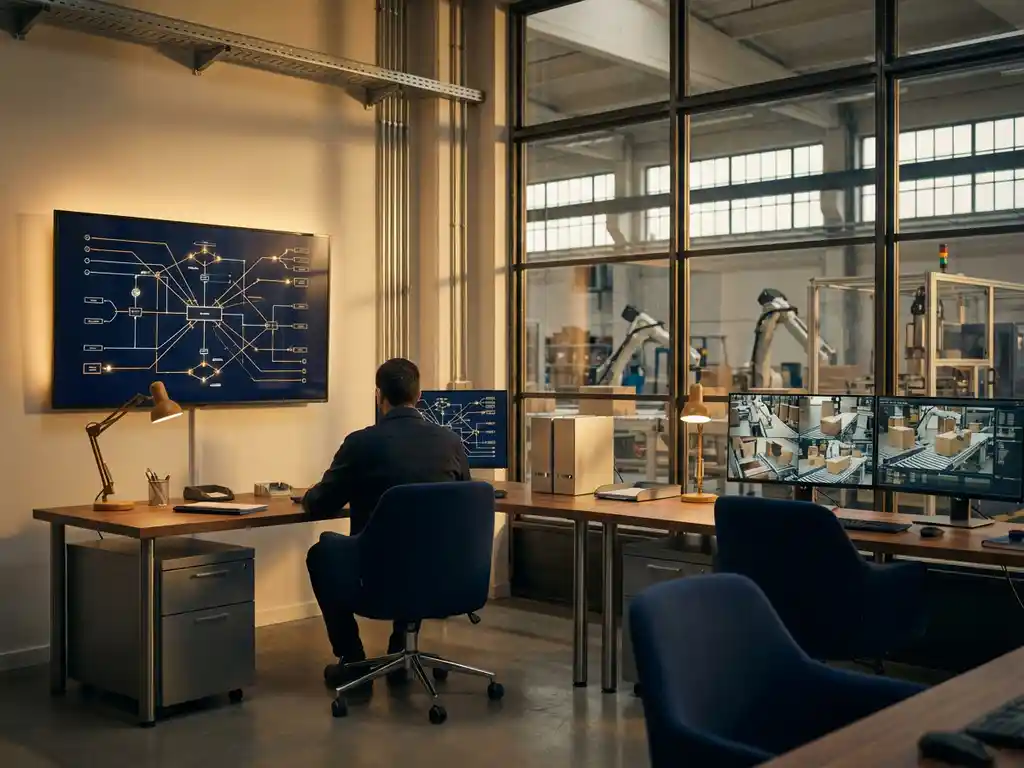
Supply chain optimization and logistics automation are two distinct yet complementary approaches to improving operational efficiency. While both aim to enhance performance and reduce costs, they address different aspects of your supply chain ecosystem. Understanding these differences is crucial to making informed decisions about where to invest your resources and which initiatives to prioritize.
Many organizations struggle to distinguish between these approaches, often implementing technology solutions without first establishing clear strategic foundations. This can lead to automated inefficiencies rather than optimized operations, making it essential to understand how each strategy works and when to deploy it effectively.
What is the difference between supply chain optimization and logistics automation?
Supply chain optimization focuses on strategic decision-making and process improvement to maximize efficiency across the entire network, while logistics automation uses technology to execute repetitive tasks without human intervention. Optimization addresses what decisions to make, whereas automation determines how to execute those decisions consistently and efficiently.
Supply chain optimization encompasses strategic planning, demand forecasting, inventory management, and network design. It involves analyzing data to make better decisions about procurement, production scheduling, and resource allocation. These supply chain optimization strategies require human expertise to interpret market conditions, assess trade-offs, and establish performance targets.
Logistics automation, conversely, focuses on mechanizing specific operational tasks such as warehouse picking, transportation routing, and order processing. It includes technologies such as automated storage and retrieval systems, robotic process automation, and autonomous vehicles that execute predetermined instructions with minimal human oversight.
How does supply chain optimization work in practice?
Supply chain optimization works by analyzing data across your entire network to identify improvement opportunities, then implementing strategic changes that enhance performance metrics such as cost, service levels, and efficiency. It combines analytical modeling with practical implementation to transform how decisions are made throughout your organization.
The optimization process typically begins with comprehensive data collection and analysis. Organizations examine historical performance, current constraints, and future projections to understand where inefficiencies exist. This includes evaluating demand forecasting opportunities, assessing inventory management potential, and identifying procurement gaps.
Advanced analytics and modeling tools then simulate different scenarios to identify optimal configurations. For example, optimization might reveal that repositioning inventory closer to key customers reduces transportation costs while improving service levels. Or it might show that adjusting production schedules based on demand patterns minimizes waste and maximizes throughput.
We help organizations implement these optimization strategies through our advisory services, combining strategic consulting with advanced analytics platforms. Our approach ensures that optimization initiatives deliver measurable results while building organizational capabilities for continuous improvement.
What are the main types of logistics automation?
The main types of logistics automation include warehouse automation systems, transportation management automation, order processing automation, and inventory tracking systems. These technologies eliminate manual tasks, reduce errors, and increase processing speed across different operational areas.
Warehouse automation encompasses automated storage and retrieval systems, robotic picking solutions, and conveyor systems that move products efficiently through facilities. These systems can significantly reduce labor costs while improving accuracy and processing speed for order fulfillment optimization.
Transportation automation includes route optimization software, automated dispatch systems, and fleet management platforms that coordinate vehicle movements and optimize delivery schedules. Advanced implementations may include autonomous vehicles and drone delivery systems for last-mile logistics.
Order processing automation streamlines customer order management through automated order entry, payment processing, and fulfillment coordination. This reduces processing time and eliminates errors that commonly occur with manual order handling, directly supporting order fulfillment optimization goals.
Which should you implement first: optimization or automation?
You should typically implement supply chain optimization before automation because optimizing processes first ensures you automate the right activities efficiently. Automating poorly designed processes simply creates inefficiencies faster, while optimization establishes the strategic foundation that makes automation investments more effective.
Starting with optimization allows you to identify which processes deliver the greatest value and which activities truly benefit from automation. For instance, demand forecasting might reveal that your current forecasting methods are fundamentally flawed. Automating these flawed processes would perpetuate errors at greater speed and scale.
Optimization also helps establish clear performance metrics and operational standards that guide automation decisions. When you understand optimal inventory levels, you can then automate replenishment processes to maintain those levels consistently.
However, some basic automation tools can support optimization efforts. Simple data collection and reporting automation can provide the information needed for optimization analysis. The key is ensuring that optimization drives automation decisions rather than implementing automation for its own sake.
How do optimization and automation work together?
Optimization and automation work together by having optimization define the strategic framework and decision rules that automation then executes consistently at scale. Optimization determines the best approaches for procurement and inventory management, while automation ensures these optimized processes run reliably without constant human intervention.
This integration creates a powerful feedback loop in which automated systems collect performance data that enables continuous optimization. For example, automated inventory tracking provides real-time data that supports ongoing inventory management, while optimized replenishment rules guide automated ordering systems.
The combination also enables dynamic optimization, in which automated systems can adjust operations based on changing conditions. Advanced implementations use machine learning to continuously refine optimization algorithms based on automated data collection, creating supply chain optimization strategies that improve over time.
Successful integration requires careful coordination between optimization initiatives and automation implementations. Organizations must ensure that automated systems remain flexible enough to accommodate optimization improvements while providing the consistency and scale that automation enables. This balanced approach transforms supply chains from reactive operations into proactive, intelligent networks that adapt quickly to changing business requirements.