
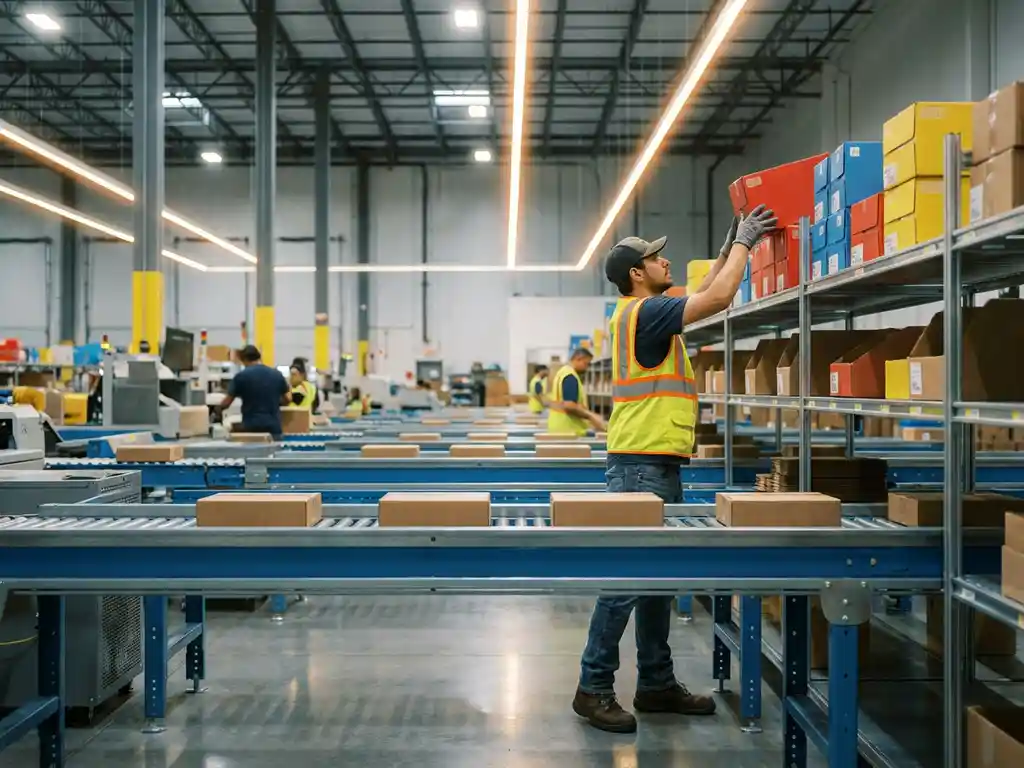
Order fulfillment optimization has become a critical focus for supply chain leaders seeking to transform operational complexity into a competitive advantage. As consumer expectations for fast, accurate delivery continue to rise, organizations must streamline every step—from order receipt to final delivery—while maintaining cost efficiency and service quality.
Modern supply chain optimization strategies encompass the entire fulfillment process, integrating advanced technologies and data-driven approaches to eliminate bottlenecks, reduce errors, and improve customer satisfaction. Understanding how to optimize order fulfillment effectively can mean the difference between thriving in today’s competitive marketplace and struggling to keep pace with customer demands.
What is order fulfillment optimization and why is it essential?
Order fulfillment optimization is the systematic improvement of all processes involved in receiving, processing, and delivering customer orders to maximize efficiency, accuracy, and speed while minimizing costs. This comprehensive approach addresses every touchpoint, from order capture through final delivery, to create a seamless operational flow.
The importance of order fulfillment optimization stems from its direct impact on customer satisfaction and business profitability. Organizations that fail to optimize their fulfillment processes face mounting challenges, including increased operational costs, delayed deliveries, inventory inefficiencies, and declining customer loyalty. In today’s competitive landscape, customers expect rapid, accurate order processing with real-time visibility into shipment status.
Effective order fulfillment optimization also drives significant cost savings through reduced labor requirements, improved inventory turnover, and lower shipping expenses. Companies that implement comprehensive optimization strategies typically see higher order accuracy, faster processing times, and an enhanced ability to scale operations during peak demand periods.
How does order fulfillment optimization improve supply chain performance?
Order fulfillment optimization improves supply chain performance by creating end-to-end visibility, reducing processing time, minimizing errors, and enabling data-driven decision-making across all operational touchpoints. These improvements cascade throughout the supply chain network, enhancing overall efficiency and responsiveness.
Performance improvements occur through several key mechanisms. First, optimized fulfillment processes reduce order cycle times by eliminating manual workarounds and streamlining workflows. This acceleration allows organizations to process higher order volumes without proportional increases in staffing or infrastructure costs. Second, improved inventory management ensures products are positioned correctly throughout the distribution network, reducing stockouts and overstock situations.
Additionally, optimization improves coordination between demand forecasting and actual fulfillment capacity. This alignment enables more accurate planning and resource allocation, reducing the need for expedited shipping and emergency procurement. The result is a more resilient supply chain that can adapt quickly to changing market conditions while maintaining consistent service levels.
What are the main components of order fulfillment optimization?
The main components of order fulfillment optimization include order management systems, inventory positioning and control, warehouse operations optimization, transportation planning, and performance monitoring. Each component must work seamlessly with the others to create an integrated fulfillment ecosystem.
Order management forms the foundation by capturing customer requirements accurately and routing orders to the most appropriate fulfillment location. This component includes order validation, credit checks, and initial routing decisions that set the stage for efficient processing. Effective order management systems integrate with existing enterprise resource planning platforms to ensure data consistency across all business functions.
Inventory positioning and control ensures products are available where and when needed without excessive carrying costs. This involves strategic placement of stock across multiple locations, accurate demand forecasting, and real-time visibility into inventory levels. Warehouse operations optimization focuses on pick-path efficiency, packaging optimization, and quality-control processes that minimize errors and processing time.
Transportation planning coordinates the final delivery phase, optimizing routing, carrier selection, and delivery scheduling to meet customer expectations while controlling costs. Performance monitoring provides continuous feedback across all components, enabling rapid identification and correction of issues before they affect customer satisfaction.
Which technologies enable effective order fulfillment optimization?
Technologies that enable effective order fulfillment optimization include warehouse management systems, advanced analytics platforms, automation solutions, and integrated planning software that provide real-time visibility and intelligent decision-making capabilities across the fulfillment process.
Warehouse management systems serve as the operational backbone, coordinating picking, packing, and shipping activities while maintaining accurate inventory records. These systems optimize pick paths, manage labor allocation, and ensure quality-control standards are maintained throughout the fulfillment process. Advanced analytics platforms analyze historical patterns and real-time data to predict demand, identify bottlenecks, and recommend process improvements.
Automation solutions, including robotic picking systems and automated sorting equipment, increase processing speed and accuracy while reducing reliance on manual labor. These technologies are particularly valuable during peak demand periods, when manual processes can become overwhelmed. We integrate advanced tools into client ecosystems, including our More Optimal platform, which combines optimization algorithms with trusted planning technologies to solve complex fulfillment challenges with speed and intelligence.
Integration platforms ensure seamless data flow between systems, eliminating information silos and enabling coordinated decision-making across all fulfillment activities. This technological foundation supports both current operational needs and future scalability as business volumes grow.
How do you measure the success of order fulfillment optimization?
The success of order fulfillment optimization is measured through key performance indicators, including order accuracy, fulfillment cycle time, cost per shipment, on-time delivery performance, and customer satisfaction scores. These metrics provide comprehensive visibility into both operational efficiency and customer impact.
Order accuracy indicates how effectively the fulfillment process eliminates errors, with leading organizations achieving accuracy above 99.5%. Fulfillment cycle time measures the duration from order receipt to shipment, with optimization efforts typically reducing this timeframe by 20% to 40%. Cost per shipment reflects total fulfillment expense divided by order volume, helping organizations understand the financial impact of optimization investments.
On-time delivery performance measures adherence to promised delivery dates, directly affecting customer satisfaction and repeat business. Customer satisfaction scores provide qualitative feedback on the overall fulfillment experience, including packaging quality, delivery condition, and communication effectiveness. Additional metrics include inventory turnover, warehouse productivity, and returns-processing efficiency.
Successful optimization programs also track improvement trends over time, ensuring performance gains are sustained and continue to advance. Organizations that implement comprehensive procurement process optimization alongside fulfillment improvements often see compounding benefits across multiple performance dimensions, creating lasting competitive advantages in their respective markets.